

Why Water Leakage Should Never Be Ignored
Water leakage is one of the most frustrating and damaging problems homeowners face. What starts as a small damp patch or ceiling stain can quickly turn into mold growth, structural weakening, and expensive repairs.
In regions like Delhi NCR, where buildings are exposed to heavy monsoons, extreme heat, and aging construction, leakage issues are especially common. Understanding the real causes of water leakage is the first step toward solving it permanently.
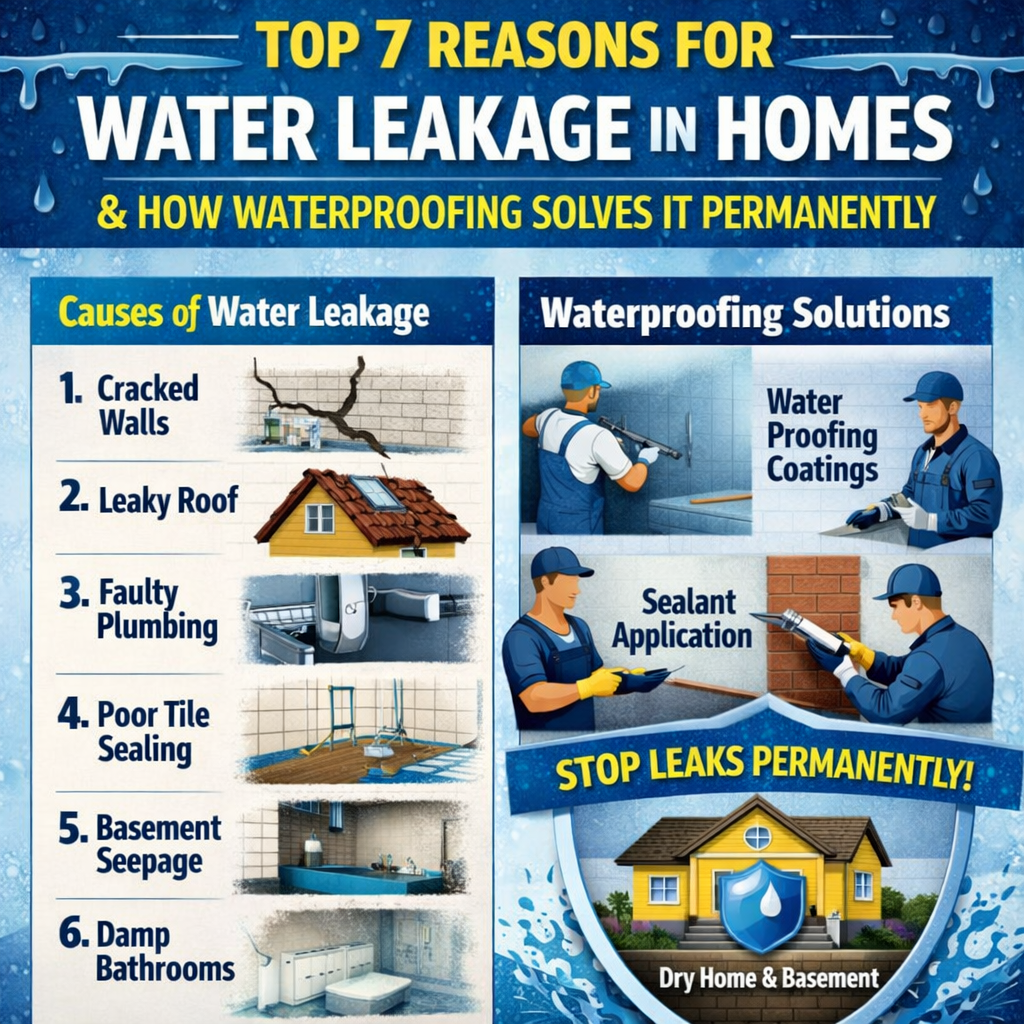
This guide explains the top 7 reasons for water leakage in homes and how professional waterproofing provides a long-term, reliable solution.
1. Cracks in Walls, Slabs, and Ceilings
Concrete naturally expands and contracts due to temperature changes. Over time, this leads to hairline cracks in walls and slabs. During monsoons, water seeps through these cracks and spreads internally.
How waterproofing solves it
Professional crack sealing and injection grouting fill cracks at their source, blocking water pathways permanently instead of masking the surface.
2. Poor Terrace & Roof Waterproofing
Terraces are the most exposed part of a building. Water stagnation, improper slope, and worn-out coatings cause roof leakage that travels down walls and ceilings.
How waterproofing solves it
Modern liquid membrane and polyurethane waterproofing systems create a seamless, flexible barrier that prevents water penetration even during heavy rainfall.
3. Bathroom and Kitchen Leakage
Bathrooms and kitchens face constant water usage. Leakage often occurs beneath tiles, making it invisible until damage spreads to nearby rooms and lower floors.
How waterproofing solves it
Sunken slab and internal waterproofing systems protect floors and walls from concealed seepage, ensuring moisture never reaches the structure.
4. External Wall Water Absorption
Rainwater can penetrate porous external walls, especially in older buildings. This leads to damp interiors, paint peeling, efflorescence, and fungal growth.
How waterproofing solves it
External wall waterproof coatings seal pores, repel rainwater, and allow the wall to breathe without absorbing moisture.
5. Basement & Foundation Seepage
Groundwater pressure forces moisture into basements and foundations, particularly during monsoon seasons. Left unchecked, this can severely compromise structural integrity.
How waterproofing solves it
Cementitious waterproofing and pressure-resistant systems block water entry and protect the foundation from long-term deterioration.
6. Faulty Plumbing & Pipe Joints
Hidden plumbing leaks inside walls or floors often go unnoticed until severe damage appears on surfaces, ceilings, or adjacent rooms.
How waterproofing solves it
Professional waterproofing includes leak detection, sealing around pipe joints, and moisture-resistant coatings to prevent recurring damage.
7. Aging Construction & Poor Drainage Design
Old buildings often lack modern waterproofing systems, and poor drainage design increases water accumulation around and on top of structures.
How waterproofing solves it
Site-specific waterproofing plans, slope correction, and drainage improvement address the root cause, not just visible symptoms.
Why Waterproofing Is the Only Permanent Solution
Temporary fixes like surface sealants or repainting only hide the problem for a short time. Professional waterproofing works because it:
- Stops water at the source
- Protects concrete and steel reinforcement
- Prevents mold, dampness, and health hazards
- Extends the building’s lifespan
- Reduces future repair costs
At Bhawani Technologies, waterproofing solutions are designed after technical inspection, material compatibility checks, and quality-controlled application—ensuring long-lasting protection across Delhi NCR.
Frequently Asked Questions (FAQs)
-
How do I know if water leakage is serious?If damp patches return after repainting or worsen during rains, the leakage is structural and needs professional waterproofing.
-
Can waterproofing fix existing leakage permanently?Yes. Advanced waterproofing methods like injection grouting and membrane systems stop leakage at its source.
-
Is waterproofing only for old houses?No. Waterproofing is equally important for new constructions to prevent future damage.
-
How long does professional waterproofing last?With correct application and quality materials, professional waterproofing systems provide long-term protection for many years.
-
Why should I choose professional waterproofing services?Professionals diagnose the root cause, use tested systems, and ensure durable results—unlike temporary DIY solutions.
Conclusion
Water leakage is not just an inconvenience—it is a warning sign of deeper structural issues. Understanding the real causes and choosing professional waterproofing ensures permanent protection.
By addressing leakage early and correctly, homeowners can protect their property, health, and long-term investment. Trust experienced waterproofing experts to stop leakage once and for all and secure your home against future damage.